
Nerva H2Sep™ 500
A porous, nanomaterial-modified zirconia–polymer composite separator. Low ionic resistance, high mechanical strength and controlled porosity, in the 500 µm class your stack already uses.
 Greenprastha
- Thickness
- 430 ± 30 µm
- Ionic resistance
- 0.2 Ω·cm²
- Bubble point
- 2.5 ± 1 bar
- Max temperature
- 100 °C
Technical data
Values are typical, measured at IIT Bombay, and do not constitute a specification.
- Membrane type
- Porous composite separator
- Application
- Alkaline water electrolysis
- Origin
- Made in Indiaभारत में निर्मित
- Format
- Coupons, sheets, rolls
| Property | Nerva H2Sep 500 |
|---|---|
| Thickness | 430 ± 30 µm |
| Ionic resistance | 0.2 Ω·cm² |
| Bubble point | 2.5 ± 1 bar |
| Young's modulus | > 600 MPa |
| Tensile strength | ≈ 65 MPa |
| Elongation at break | ≈ 26% |
| Max. operating temperature | 100 °C |
More current at the same cell voltage
Room temperature
80 °C
| Condition | Cell voltage | Nerva H2Sep 500 | Commercial reference | Gain |
|---|---|---|---|---|
| Room temperature | 2.4 V | ~2.00 A | ~1.45 A | ~ +38% |
| 80 °C | 2.4 V | ~2.65 A | ~2.10 A | ~ +26% |
Tensile stress–strain
A stiffer, stronger sheet that keeps hydrogen and oxygen apart
- Strength for real stacks. ≈65 MPa tensile strength against ≈24 MPa; Young's modulus above 600 MPa against 310 MPa. The sheet resists tearing in assembly, creep under compression, and pressure and thermal cycling.
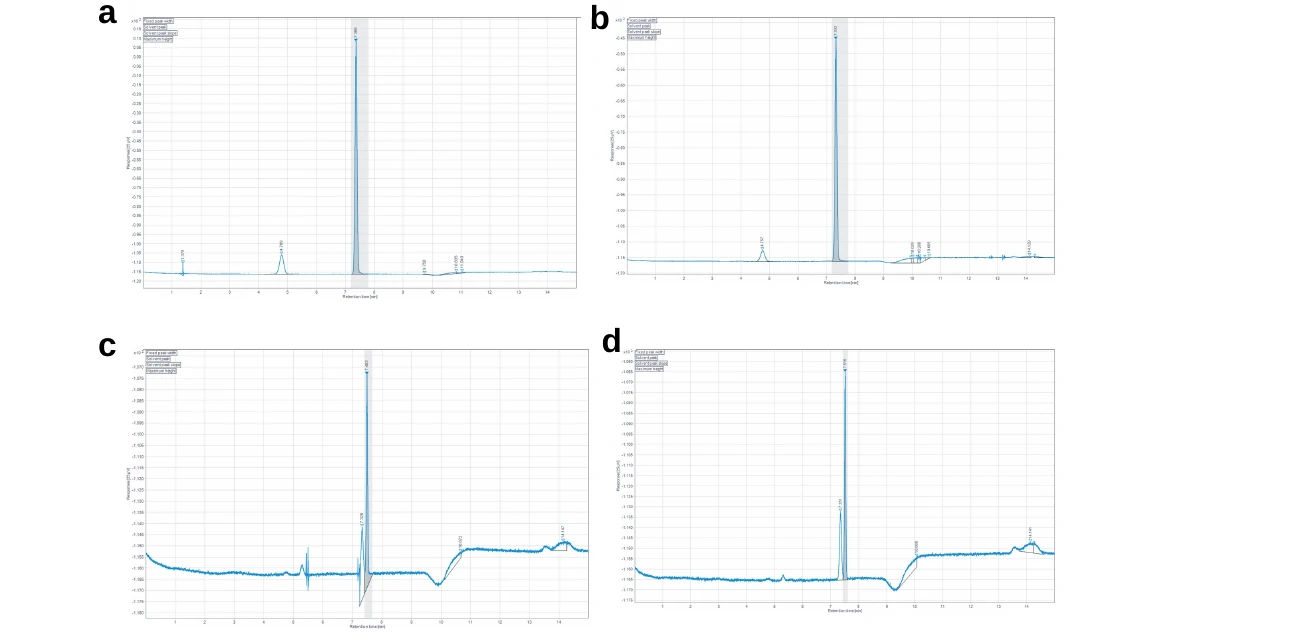
- Gas separation. Bubble point 2.5 ± 1 bar (reference: 2 ± 1 bar), with H₂ and O₂ streams analysed by gas chromatography (TCD).
- Operating window. Up to 100 °C, covering standard alkaline operation at 70–90 °C.
Head-to-head with the commercial 500 µm-class reference
| Property | Nerva H2Sep 500 | Commercial reference | Read-out |
|---|---|---|---|
| Thickness | 430 ± 30 µm | 500 ± 50 µm | Thinner, lower-resistance path |
| Ionic resistance | 0.2 Ω·cm² | – | Low ohmic loss |
| Bubble point | 2.5 ± 1 bar | 2 ± 1 bar | Higher |
| Young's modulus | > 600 MPa | 310 MPa | ~2× stiffer |
| Tensile strength | ≈ 65 MPa | ≈ 24 MPa | ~2.7× stronger |
| Cell current, 2.4 V, 80 °C | ~2.65 A | ~2.10 A | +26% |
| Cell current, 2.4 V, RT | ~2.00 A | ~1.45 A | +38% |
| Max. operating temperature | 100 °C | 110 °C | Covers 70–90 °C operation |
| Origin | Designed and made in India | Imported | Indigenous supply |
Values measured at IIT Bombay. Reference values measured on the same rig or taken from the reference manufacturer's published data.
H₂ / O₂ gas purity: gas chromatography (TCD)
Lower specific energy and a more robust stack
For the stack designer
Same current at lower cell voltage, or higher current density in the same footprint. A drop-in thickness class and a stronger sheet for high-pressure, large-area cells.
For the plant owner
Lower power per kilogram of hydrogen, the largest lever on levelised cost. Rupee pricing, shorter lead times and replacement programmes serviced from India.
For sourcing & quality
A higher-performance alternative to the incumbent, with data at cell and short-stack level and engineering support through qualification.
Questions stack engineers ask us
On fit, test conditions, gas purity, durability, formats and local content.
01Is it a true drop-in for my 500 µm-class stack?
At 430 ± 30 µm it sits inside the 500 µm class, so we expect no re-tooling of frames or gaskets. We confirm fit on your cell during the evaluation.
02What operating conditions has it been tested at?
Cell-level data at room temperature and 80 °C in KOH, with a maximum operating temperature of 100 °C. We share full test conditions under NDA and test at your exact window.
03How is gas purity and crossover verified?
Hydrogen and oxygen streams are analysed by gas chromatography (TCD) against a commercial reference. Quantitative crossover at your pressure and current density is measured jointly on your bench.
04What about long-term durability?
We run 1,000–2,000-hour short-stack trials on customer benches, in parallel with long-duration tests in our facilities, plus independent third-party testing.
05What sizes and formats can you supply?
Coupons and sheets in your sizes for single-cell testing, then sheets or rolls for pilot stacks and volume supply, each with a certificate of analysis.
06Does it help with local-content requirements?
Yes. Nerva H2Sep 500 is designed and manufactured in India, so it counts toward domestic value addition for SIGHT and National Green Hydrogen Mission programmes.
A technical call, then samples on your bench
We bring the full datasheet, test conditions and a proposed qualification protocol for your stack.